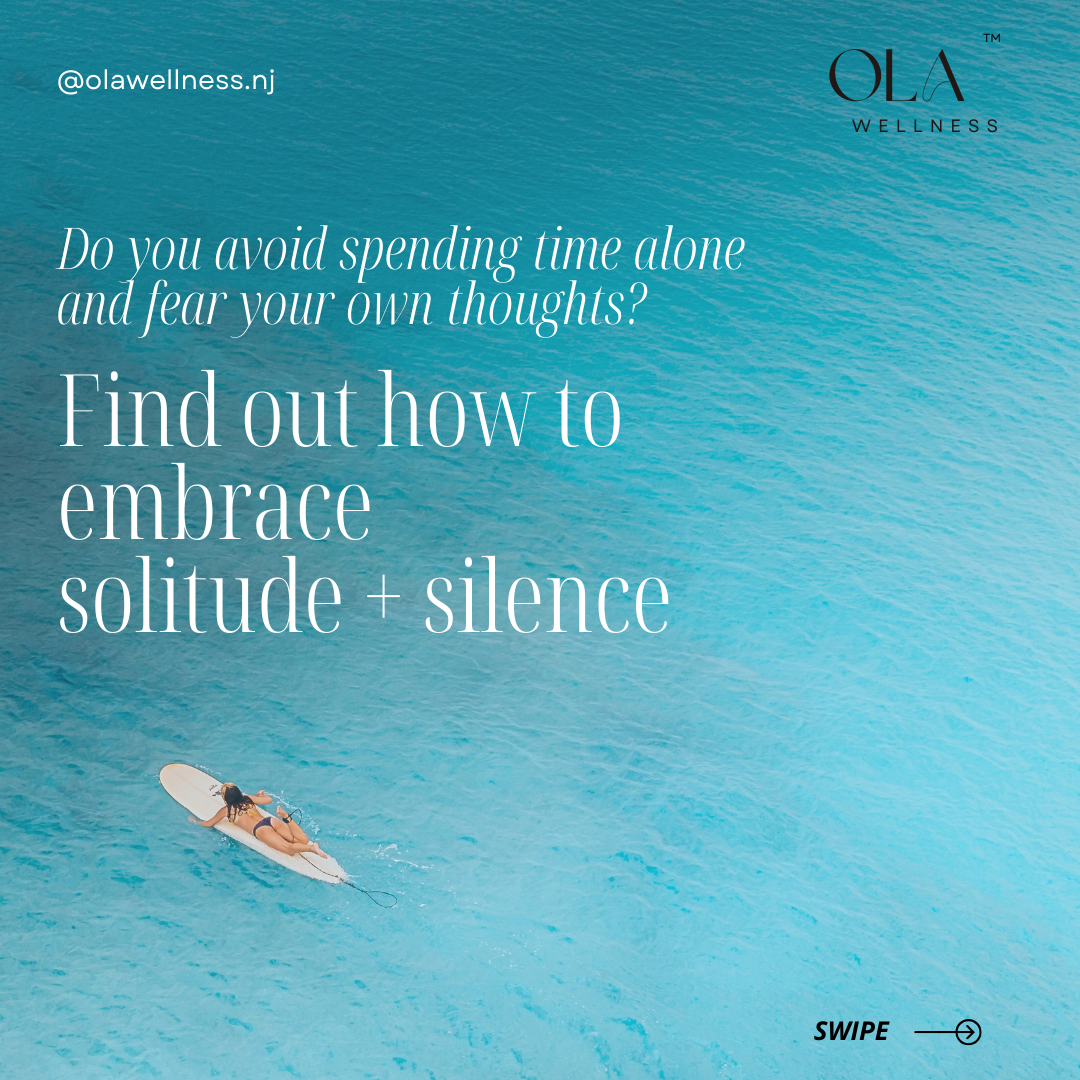
Do you avoid spending time alone and fear your own thoughts? Find out how to embrace solitude and silence
In a world that's constantly bustling with activity, it's okay to admit that finding solace in silence isn't always easy. Many of us struggle with being alone, with the quiet moments that invite self-reflection. But here's the truth: these moments hold incredible power…
When we sit in silence, we give ourselves the chance to truly listen – to our thoughts, feelings, and dreams. It's a space where we can untangle the threads of our lives and rediscover who we are. 🌱 Does this sound absolutely terrifying? Let's unpack this some more...
🚩Signs that you struggle with solitude & silence
Restlessness: Feeling uneasy or agitated when alone in a quiet environment.
Constant Distraction: An overwhelming need to fill every moment with noise, activity or being with others
Anxiety: Experiencing heightened feelings of worry or nervousness when left alone with one's thoughts.
Avoidance: Actively avoiding situations and emotions that require solitude or quiet contemplation.
Negative Self-Talk: Engaging in self-critical or negative thoughts when in silence.
Physical Discomfort: Feeling physically tense, fidgety, or uncomfortable when not distracted.
Overthinking: A tendency to overanalyze thoughts or scenarios when alone.
Seeking Validation: Relying on external validation or company to feel comfortable.
Difficulty Relaxing: Finding it hard to unwind or let go of stress when alone.
Impatience: Feeling impatient or restless when not engaged in a specific activity.
What might be causing this discomfort?
Fear of Unconscious: Silence reveals suppressed thoughts and emotions, which can be unsettling for those avoiding them.
Avoidance of Self-Reflection: Negative self-concept leads to discomfort when confronting thoughts and introspection.
Attachment Concerns: Fear of disconnection or abandonment makes solitude threatening to identity.
Anxiety and Overthinking: Solitude intensifies anxiety symptoms, triggering overthinking and worry.
Cultural Pressure: Societal norms prioritize constant connection, making solitude feel unproductive.
Past Trauma: Solitude triggers memories and emotions tied to isolation or danger.
Self-Criticism: Negative self-talk flourishes alone, reinforcing feelings of unworthiness.
Existential Contemplation: Solitude prompts reflection on purpose and existential questions, causing unease.
Understanding these psychological factors can empower you to address your discomfort and work towards a more harmonious relationship with solitude and silence.
What you can do to work through the discomfort of solitude & silence
Nature Walks: Spend time outdoors in a natural setting, such as a park or forest, to gradually acclimate to the quiet and connect with the environment. Try this activity alone.
Start Small: Begin with short periods of solitude and gradually increase the time as you become more accustomed to it.
Journaling: Write down your thoughts and feelings during moments of solitude. This can help you process emotions and become more comfortable with introspection.
Deep Breathing: Use deep breathing exercises to relax your body and mind when faced with silence.
Therapy: Consider seeking guidance from a therapist or counselor who specializes in anxiety or mindfulness. Therapy can provide tools and strategies to cope with discomfort in solitude as well as uncover deeper reasons behind these feelings.
Engage in Creative Activities: Channel your energy into creative outlets such as painting, writing, or crafting during moments of solitude.
Progressive Muscle Relaxation: Practice progressive muscle relaxation techniques to alleviate physical tension and anxiety.
Focus on Self-Compassion: Be kind to yourself during these moments. Understand that discomfort is a normal part of growth and self-discovery.
Supportive Community: Connect with others who share similar struggles. Join support groups or online communities where you can discuss experiences and learn coping strategies.
Gentle Movement: Incorporate gentle movement practices like yoga or tai chi to help ground yourself and ease any discomfort experienced during silence.
Remember that progress takes time and patience. It's important to approach this journey with self-compassion and a willingness to explore new ways of finding comfort in solitude. If your difficulty with silence significantly impacts your daily life, seeking professional help, such as therapy, can offer personalized guidance and support.
Addressing the potential underlying factors often requires a combination of self-awareness, personal growth, and sometimes professional support. Exploring and understanding the psychological roots of discomfort with silence or solitude can be the first step toward developing a healthier relationship with both.
These deeper reasons can vary from person to person, and understanding the underlying cause can help individuals grow and work towards reaching their full potential. Healing, growth and wellness is possible and within reach!