Effective Communication Skills
Effective Communication Skills: How we express ourselves can either build bridges or create barriers. 🗣️These effective communication skills can help foster understanding, strengthen bonds, and ensure your connections survive and thrive 💫
“Strong relationships are based on trust and communication. But if there is no communication, there can be no trust.” - Simon Sinek
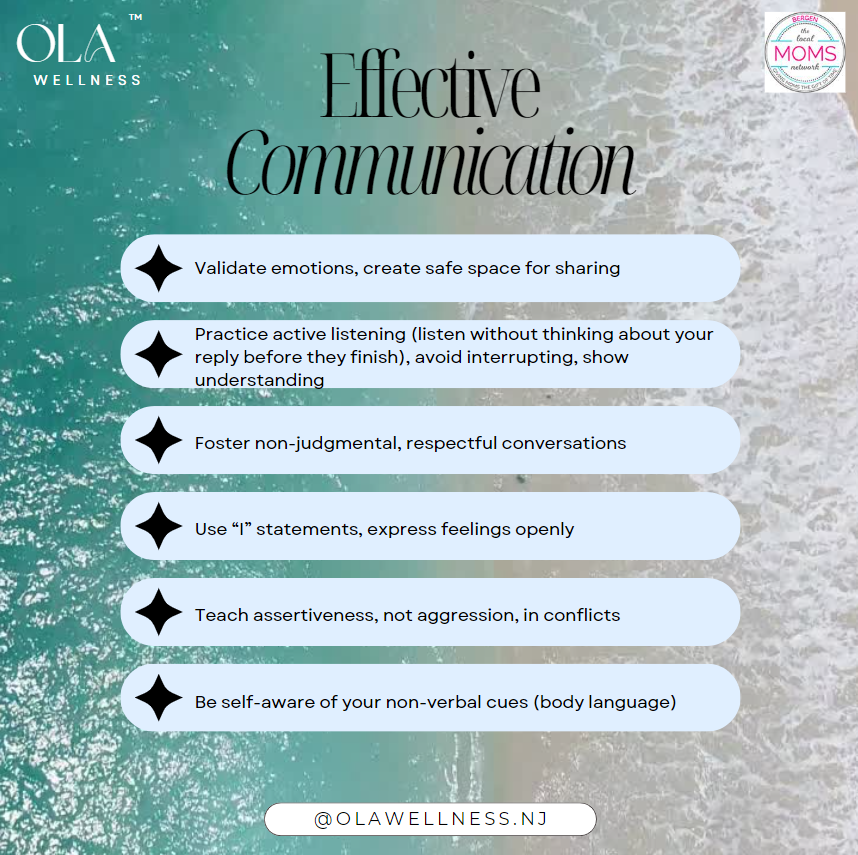
Validate emotions, create safe space for sharing
Practice active listening (listen without thinking about your reply before they finish), avoid interrupting, show understanding
Foster non-judgmental, respectful conversations
Use “I” statements, express feelings openly
Teach assertiveness, not aggression, in conflicts
Be self-aware of your non-verbal cues (body language)
Examples of how to use each of the aforementioned skills:
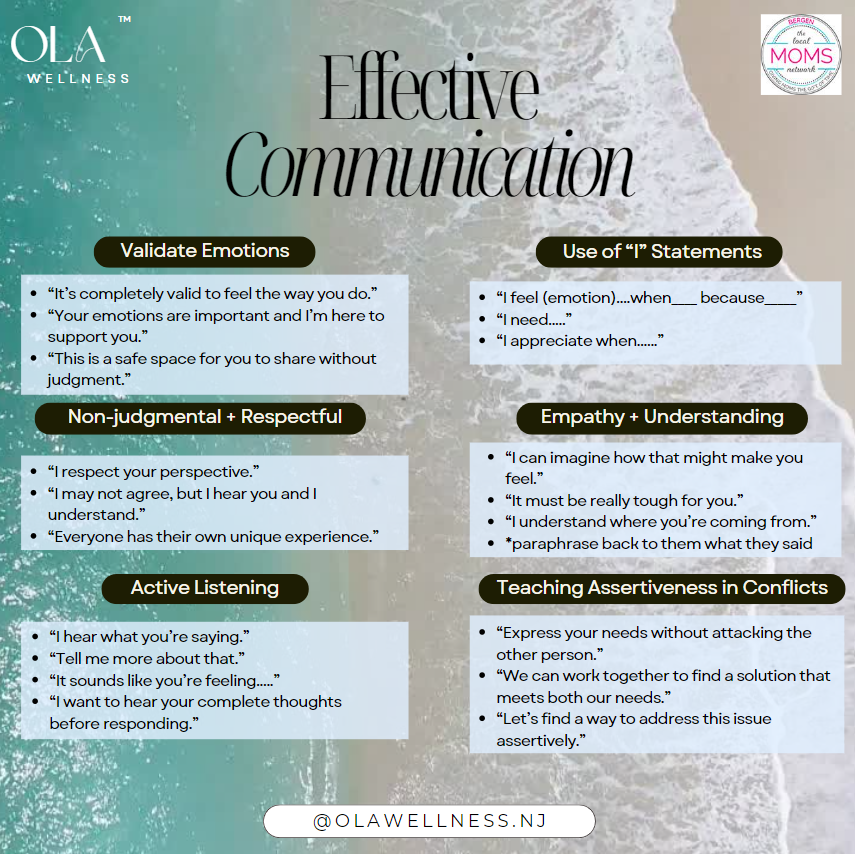
Validate Emotions:
“It’s completely valid to feel the way you do.”
“Your emotions are important and I’m here to support you.”
“This is a safe space for you to share without judgment.”
Non-judgmental and Respectful:
“I respect your perspective.”
“I may not agree, but I hear you and I understand.”
“Everyone has their own unique experience.”
Active Listening:
“I hear what you’re saying.”
“Tell me more about that.”
“It sounds like you’re feeling.....”
“I want to hear your complete thoughts before responding.”
Use of “I” Statements:
“I feel (emotion)....when____ because_____”
“I need.....”
“I appreciate when......”
Empathy and Understanding:
“I can imagine how that might make you feel.”
“It must be really tough for you.”
“I understand where you’re coming from.”
*paraphrase back to them what they said
Teaching Assertiveness in Conflicts:
“Express your needs without attacking the other person.”
“We can work together to find a solution that meets both our needs.”
“Let’s find a way to address this issue assertively.”